
Understanding Screen Time’s Impact on Modern Society
While we can see the physical changes that excessive screen time brings to our bodies, the mental and emotional transformations happening inside our minds are far more profound and concerning. We’re witnessing the largest uncontrolled psychological experiment in human history, where billions of people across all age groups are unknowingly participating in a radical rewiring of their brain chemistry, emotional regulation, and mental well-being.
Where We Were: The Pre-Digital Mind
Before the age of constant connectivity, our mental landscape operated very differently. Our brains evolved over millennia to handle gradual, predictable stimuli. Boredom was a natural state that led to creativity and introspection. Attention spans were naturally longer, developed through reading books, engaging in extended conversations, and working on single tasks for hours.
Mental health challenges existed, but they were often tied to real-world stressors, trauma, or biological factors. Children developed emotional regulation through face-to-face interactions, unstructured play, and natural consequences. Adults found mental stimulation through hobbies, social gatherings, and meaningful work. Seniors maintained cognitive function through varied life experiences and continuous learning.
The human brain thrived on what psychologists call “productive boredom”—moments of unstimulated quiet that allowed for processing experiences, developing creativity, and maintaining emotional balance.
Where We Are: The Current Mental Health Crisis
Today’s screen-saturated environment has fundamentally altered our neurological functioning, creating what mental health professionals are calling an unprecedented crisis across all demographics:
The Dopamine Disruption:
Our brains are now flooded with artificial dopamine hits from likes, notifications, and instant gratification. This constant stimulation has created a generation with dopamine dysfunction—where natural pleasures (conversation, nature, accomplishment) no longer provide sufficient satisfaction.
**Across Age Groups:**
Children (5-12 years):
– ADHD diagnoses have increased by 40% in the past decade
– Emotional regulation problems are appearing earlier and more severely
– Decreased ability to engage in imaginative play without screen stimulation
– Rising rates of anxiety disorders, even in elementary school children
Teenagers (13-18 years):
– Teen depression rates have increased by 60% since 2007, coinciding with smartphone adoption
– Self-harm and suicide rates have reached crisis levels
– Body image disorders fueled by social media comparison
– Sleep disorders affecting 70% of teens due to screen use before bed
Young Adults (19-35 years):
– Anxiety disorders now affect 40% of young adults
– “Nomophobia” (fear of being without phone) affecting 66% of smartphone users
– Decreased attention spans, with average focus time dropping from 12 seconds to 8 seconds
– Rising rates of depression linked to social media comparison and digital isolation
Older Adults (35+ years):
– Increased rates of technology-induced anxiety and frustration
– Digital overwhelm leading to decision fatigue and stress
– Social isolation paradoxically increasing despite digital “connection”
– Cognitive decline accelerated by passive screen consumption
The Comparison Trap:
Social media has created an environment of constant comparison, where everyone’s highlight reel becomes the standard against which we measure our everyday reality. This has led to widespread feelings of inadequacy, FOMO (fear of missing out), and decreased life satisfaction across all age groups.
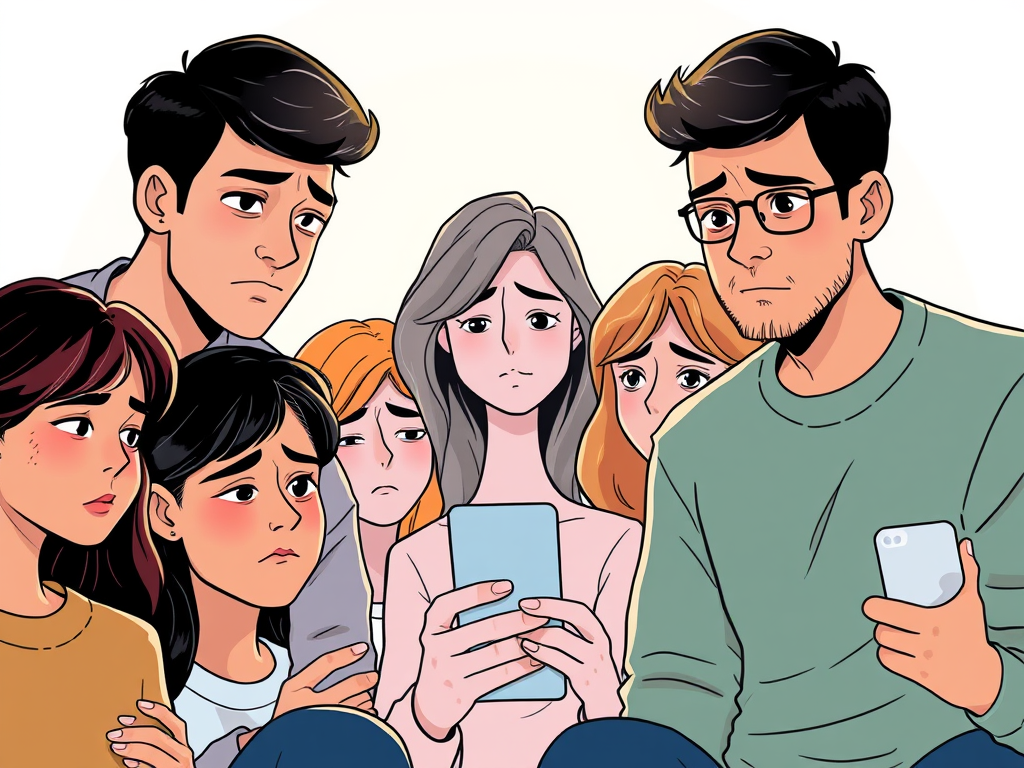
Where We’re Headed: The Mental Health Trajectory
Without significant changes, current trends point toward a concerning future:
– Mental health services will be overwhelmed by screen-related disorders
– Attention spans may continue to shrink, affecting learning and productivity across society
– Authentic human connection skills may atrophy, leading to increased social anxiety and isolation
– A generation of children may grow up unable to self-regulate emotions without digital stimulation
– The gap between digital natives and digital immigrants may create unprecedented generational divides
Perhaps most alarming is the normalization of anxiety, depression, and attention problems as simply “part of modern life” rather than symptoms of an unhealthy relationship with technology.
The Mental Health Detox: Reclaiming Our Minds
The path back to mental wellness requires intentional rewiring of our relationship with screens and rediscovering natural sources of mental stimulation and emotional regulation.
Immediate Mental Health Actions (0-30 days):
**Digital Mindfulness:** Before picking up any device, pause and ask: “What am I hoping to accomplish?” This simple awareness practice can reduce mindless scrolling by up to 40%.
**Notification Detox:** Turn off all non-essential notifications. Your brain needs periods of uninterrupted peace to process emotions and maintain mental clarity.
**Morning Protection:** Keep the first hour of your day screen-free. Use this time for reflection, planning, or gentle activities that set a positive mental tone.
**Evening Boundaries:** Implement a “digital sunset” 1-2 hours before bed, allowing your mind to naturally wind down and process the day’s experiences.
Short-term Mental Wellness Strategies (1-6 months):
**Boredom Retraining:** Deliberately seek moments of unstimulated time. Start with 5-10 minutes daily of sitting quietly without any input. This trains your brain to find peace in stillness and often leads to creative insights.
**Attention Span Rebuilding:** Practice single-tasking. Choose one activity (reading, conversation, work task) and commit to it fully for gradually increasing periods. Start with 15 minutes and work up to several hours.
**Emotional Regulation Practice:** When feeling strong emotions, resist the urge to immediately distract yourself with screens. Instead, sit with the feeling, name it, and allow it to pass naturally. This rebuilds your natural emotional processing abilities.
**Social Media Boundaries:** If complete elimination isn’t possible, implement strict time limits and curate your feeds to include only content that genuinely adds value to your life.
Long-term Mental Health Rehabilitation (6+ months):
**Cognitive Behavioral Techniques:** Work with mental health professionals to identify and change thought patterns that have been shaped by digital environments. This includes addressing comparison habits, validation seeking, and instant gratification expectations.
**Mindfulness and Meditation:** Regular meditation practice literally rewires the brain for better attention, emotional regulation, and stress management. Even 10 minutes daily can create measurable improvements in mental health.
**Real-World Engagement:** Actively seek activities that provide natural dopamine and serotonin production: exercise, creative pursuits, volunteer work, nature experiences, and meaningful relationships.
**Professional Support:** Don’t hesitate to seek therapy or counseling, especially for screen-related anxiety, depression, or attention issues. Mental health professionals are increasingly trained to address digital wellness.
The Benefits: Mental Freedom and Clarity
Those who successfully implement mental health-focused digital detox strategies experience profound transformations:
**Enhanced Emotional Regulation:** The ability to handle stress, disappointment, and challenging emotions without immediately reaching for digital distraction.
**Improved Focus and Creativity:** Longer attention spans, deeper thinking, and the return of creative problem-solving abilities that come from unstimulated mental time.
**Authentic Self-Worth:** Reduced dependence on external validation and comparison, leading to more stable self-esteem and life satisfaction.
**Better Relationships:** Improved ability to be present with others, engage in meaningful conversations, and form deeper connections.
**Mental Resilience:** Stronger coping mechanisms for life’s challenges, less anxiety about being disconnected, and greater confidence in handling real-world situations.
**Restored Wonder:** The return of appreciation for simple pleasures, natural beauty, and everyday experiences that had been overshadowed by digital stimulation.
Moving Forward: Mental Health as a Priority
Our mental health is not a luxury—it’s the foundation of our ability to live fulfilling, productive, and connected lives. By recognizing how screen time has altered our mental landscape and taking active steps to restore balance, we’re not just improving our own well-being; we’re modeling healthy digital relationships for future generations.
The goal is not to fear technology but to use it in ways that support rather than undermine our mental health. This means being intentional about our consumption, setting boundaries that protect our psychological well-being, and remembering that our minds, like our bodies, need rest, variety, and natural stimulation to thrive.
*Next in this series: How excessive screen time is fragmenting our social connections and changing the way we communicate with each other.*
 COMPOUNDING LIFE
Make your point