
Sam Altman’s latest piece, “The Gentle Singularity,” makes a compelling case that we’ve already crossed the threshold into the age of artificial superintelligence—it’s just happening more smoothly than sci-fi predicted. As both a tech enthusiast and critic, I find his perspective both insightful and incomplete.
What Altman Gets Right
Altman’s core insight is spot-on: we’re living through a technological inflection point that feels surprisingly normal day-to-day. The fact that we can casually chat with systems that outperform humans on many cognitive tasks, yet still struggle with basic problems like disease and space travel, captures the strange duality of our moment.
His emphasis on scientific acceleration is particularly compelling. If AI can compress decades of research into years, the compounding effects on medicine, materials science, and our understanding of the universe could indeed be transformative. The productivity gains alone—from code generation to content creation—are already reshaping entire industries.
The “gentle” framing is also psychologically important. Rather than apocalyptic disruption, Altman presents a future where AI amplifies human capability gradually, allowing society to adapt.
The Critical Gaps
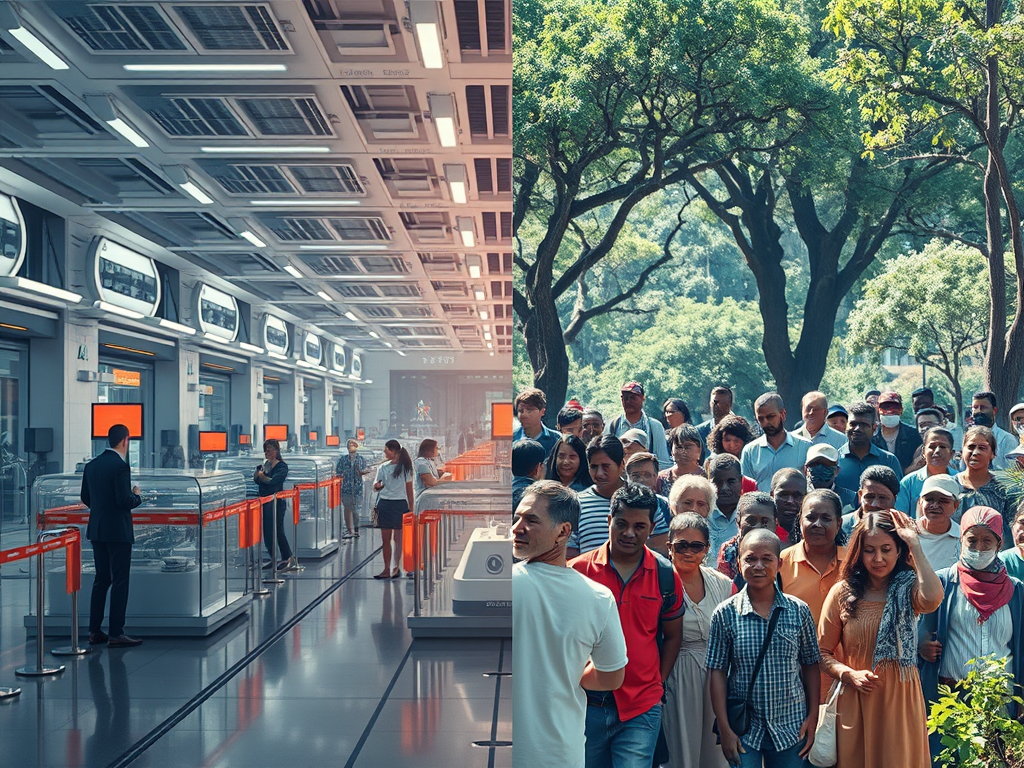
But here’s where enthusiasm needs to meet reality: calling this transition “gentle” assumes a lot about how benefits will be distributed and risks will be managed.
The Distribution Problem: Altman’s optimistic vision sidesteps who controls these systems and who benefits from the productivity gains. If AI-driven scientific breakthroughs remain locked behind corporate walls or accessible only to those who can afford them, the “vastly better future” becomes vastly unequal.
The Governance Vacuum: We’re building systems smarter than humans with regulatory frameworks designed for a pre-AI world. The “gentle” transition depends on getting governance right, but Altman barely mentions the policy challenges ahead.
The Unpredictability Factor: Perhaps most importantly, Altman may be underestimating just how “weird” things could get. Complex systems have emergent properties we can’t predict. The more capable AI becomes, the more likely we are to encounter scenarios nobody anticipated.
The Path Forward
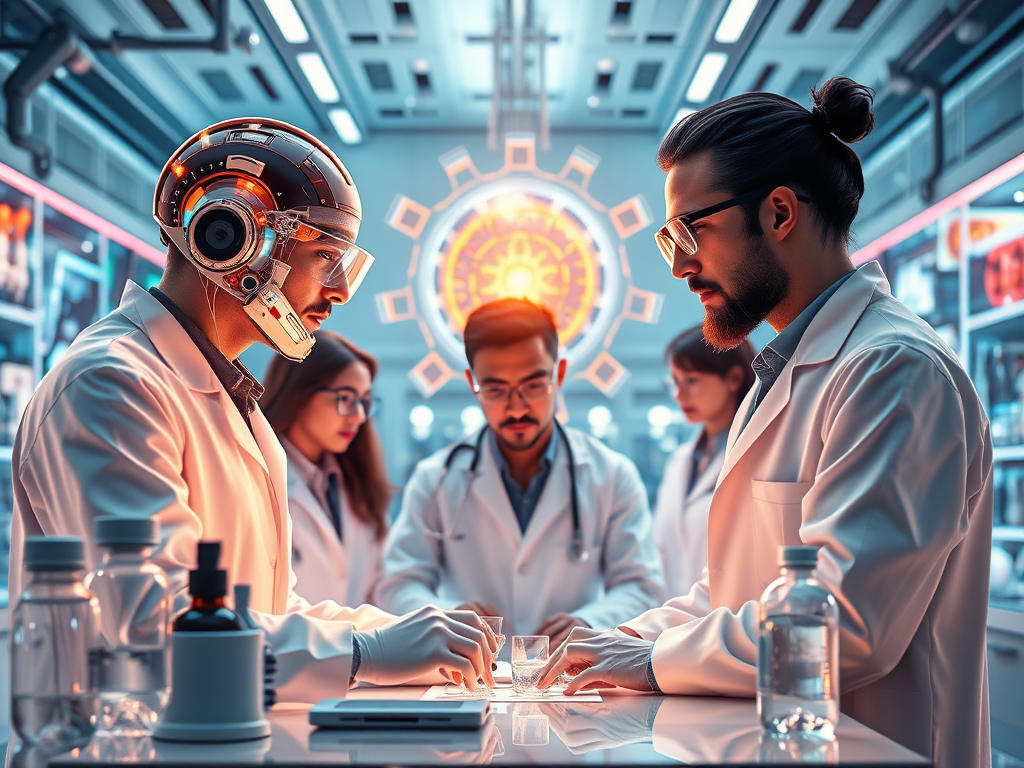
Altman’s vision of AI-accelerated scientific progress is genuinely exciting—imagine curing aging, mastering fusion energy, or understanding consciousness itself. But realizing this potential while avoiding the pitfalls requires more than technological advancement.
We need:
- Proactive governance frameworks that evolve with the technology
- Deliberate efforts to ensure broad access to AI benefits
- Robust safety research that keeps pace with capability development
- Public dialogue about the kind of AI-enabled future we want
The singularity may indeed be gentle, but only if we make it so. Altman’s optimism is warranted, but it must be paired with the hard work of building institutions and safeguards worthy of the moment we’re in.
The future can be vastly better than the present—but only if we’re as thoughtful about the transition as we are excited about the destination.
 COMPOUNDING LIFE
Make your point